
STEM at Summit.
Robotics and technology.
Build. Code. Create. Compete.
At Summit School, students don’t just learn about technology. They use it to create, experiment, and solve real problems. From elementary robotics lessons to middle school technology electives and competitive robotics teams, students develop the confidence to turn ideas into something extraordinary.
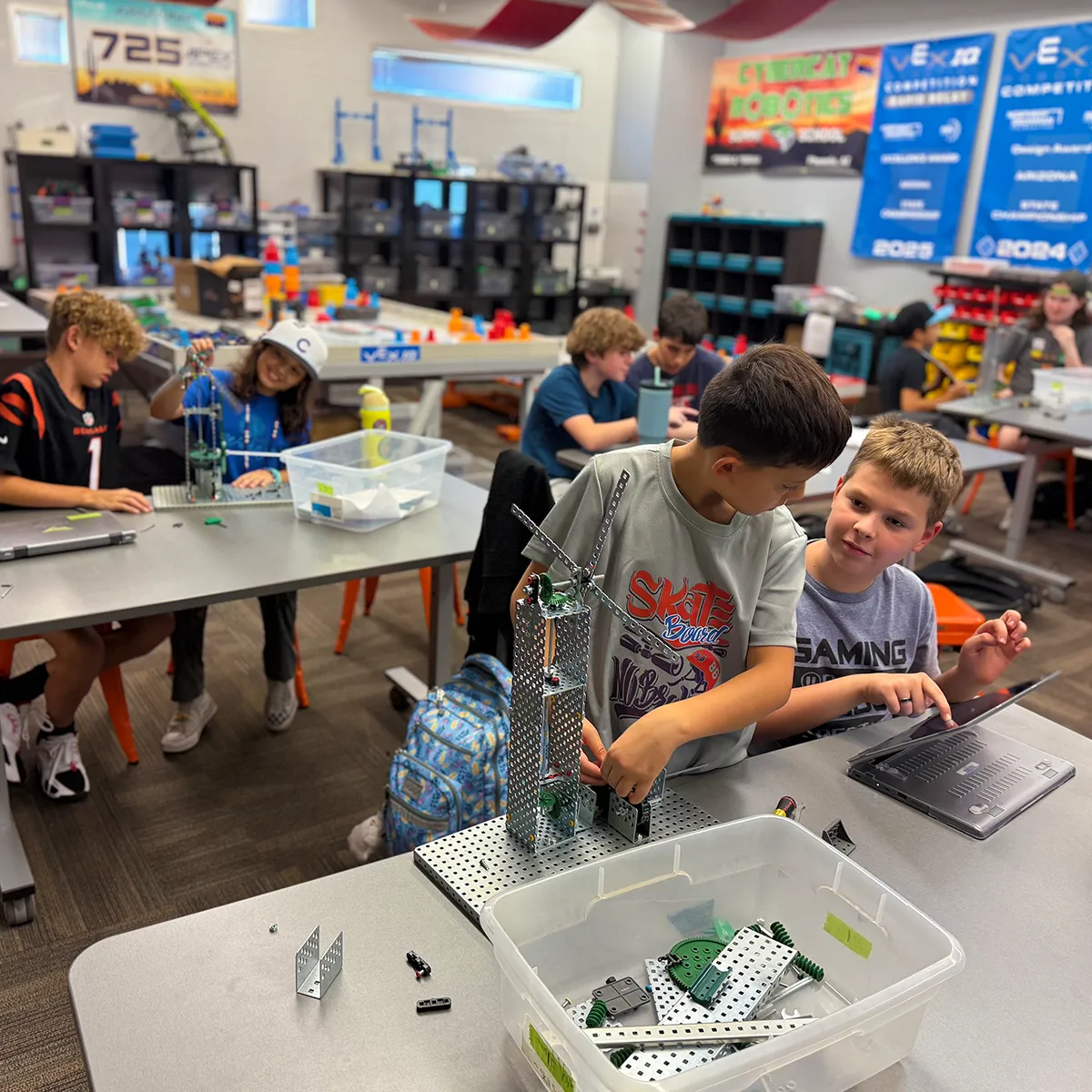
More than an after-school club.
Robotics for everyone.
At Summit, robotics isn’t reserved for students who join a club. It’s part of the school day.
Through regular technology classes, every elementary student has opportunities to explore coding, robotics, and engineering as their skills develop.
Students don’t just learn how technology works. They discover what they can create with it.
The challenges grow with students.
Summit’s technology curriculum builds progressively, introducing new skills and increasingly complex challenges as students advance through elementary school.
Beginning in kindergarten, students develop essential digital skills, from navigating devices to creating presentations and working with everyday technology tools. By second grade, robotics becomes a regular part of their learning, with approximately half of technology lessons in grades 2–5 dedicated to hands-on robotics experiences.
Students progress from VEX GO to VEX IQ, learning to design, build, program, and troubleshoot their creations. Along the way, they develop the critical thinking, collaboration, and persistence that come from testing ideas, overcoming obstacles, and finding their own solutions.
For students who discover a deeper interest, middle school technology electives and competitive robotics provide opportunities to take those skills even further.
Every student has the opportunity to discover what they’re capable of.
A foundation for innovation.
Growing skills. Bigger challenges.
Summit’s technology curriculum builds on itself, introducing new skills and increasingly complex challenges as students grow. Beginning with essential digital skills in kindergarten, students progress into hands-on robotics, coding, and engineering. Along the way, they learn to think critically, experiment with ideas, and find creative solutions to problems.
Kindergarten–1st grade
Building digital confidence
Students develop foundational technology skills, learning to navigate devices, create digital projects, and use technology with increasing independence.
Grades 2–3
Discovering robotics
Using VEX GO robotics, students explore basic engineering concepts as they begin designing, building, and solving problems through hands-on activities.
Grades 4–5
Designing and programming
Students advance to VEX IQ robotics, tackling more complex building and programming challenges that encourage experimentation, teamwork, and creative thinking.
Middle school
Engineering new possibilities
Students can explore advanced robotics, coding, engineering, and digital design through specialized technology electives, including opportunities to work with VEX EXP.
Throughout elementary school, students also develop practical digital skills, including word processing, presentations, and spreadsheets, while exploring creative tools such as Scratch and TinkerCAD.
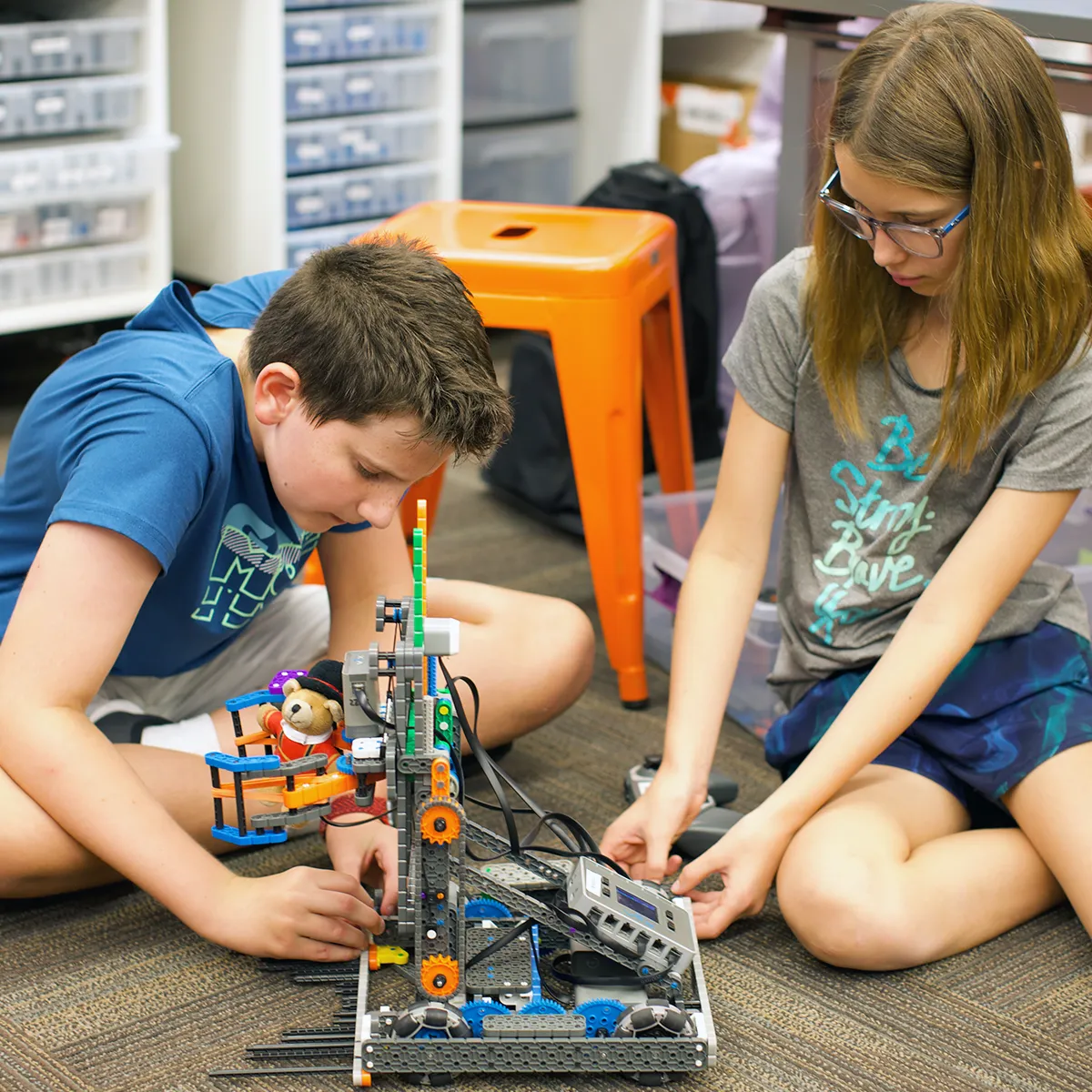
Beyond the basics.
Explore. Design. Innovate.
In middle school, technology becomes an opportunity to pursue individual interests, develop new skills, and turn creative ideas into real projects.
Through specialized electives, students explore everything from digital design to engineering and programming, gaining experience with tools and concepts that extend beyond traditional classroom learning.
Elective opportunities may include:
3D design and modeling
Students use digital tools to create, visualize, and refine three-dimensional designs.
Automation and robotics
Students explore engineering, programming, and robotic systems using platforms such as VEX EXP.
Game design and coding
Students develop computational thinking and coding skills through the creative process of designing games.
Robotics exploration
Additional robotics-focused opportunities allow students to deepen their understanding of engineering, programming, and collaborative problem-solving.
Cybercat competitive robotics.
From the classroom to competition.
For students ready to take their interests further, Summit’s Cybercat Robotics program turns curiosity into real-world engineering challenges.
Beginning in fourth grade, students work in small teams to design, build, program, and test robots for VEX Robotics competitions.
Each year’s competition introduces a new challenge, encouraging students to develop original designs, experiment with strategies, and continuously improve their work.
Along the way, students strengthen their communication, collaboration, and problem-solving skills while experiencing the excitement of working toward a shared goal.
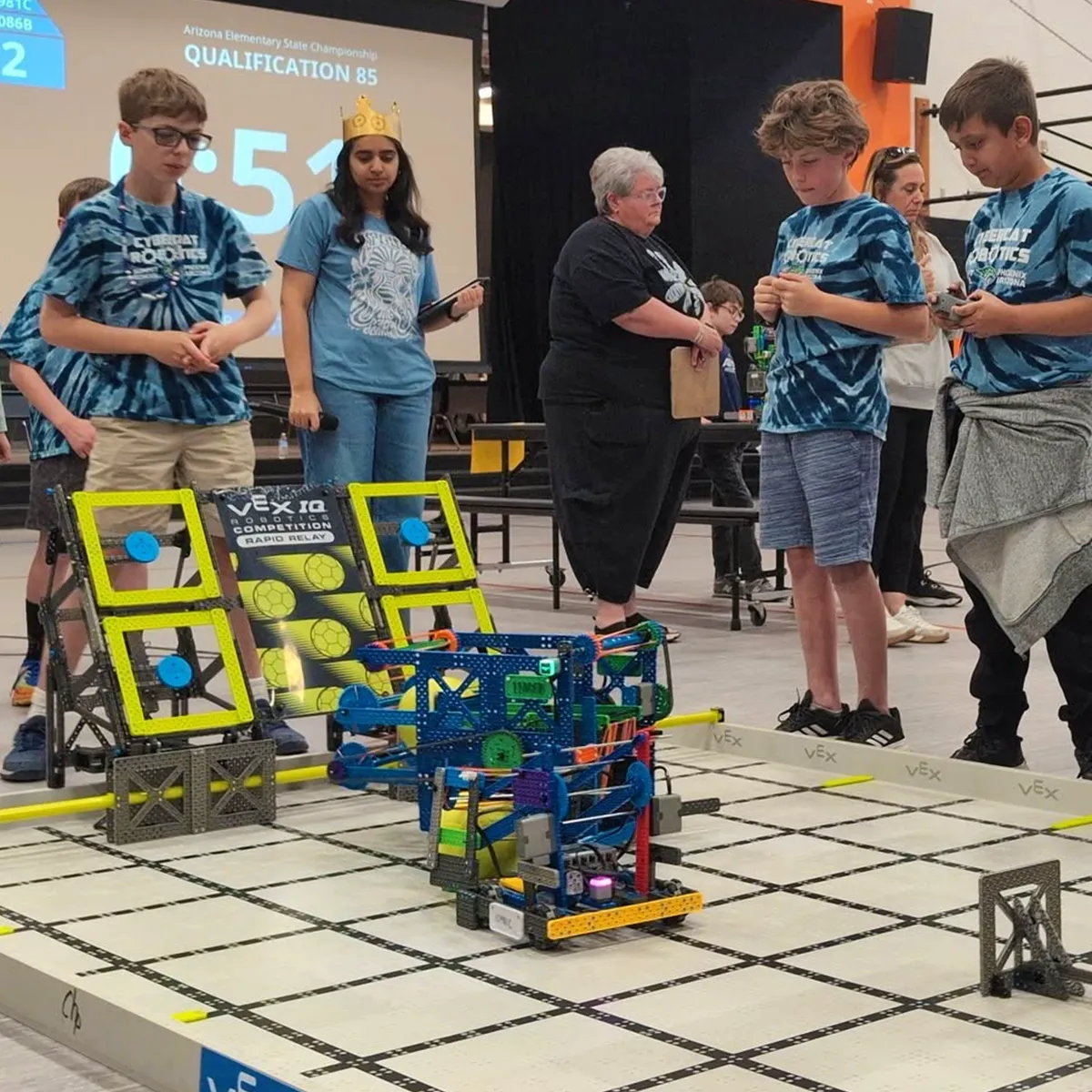
Designed by students. Built by students.
In Cybercat Robotics, students take ownership of the engineering process.
Teachers, coaches, and volunteer mentors provide guidance and encouragement, but students are responsible for designing, programming, testing, and improving their robots.
They don’t just follow instructions. They learn to find their own solutions.
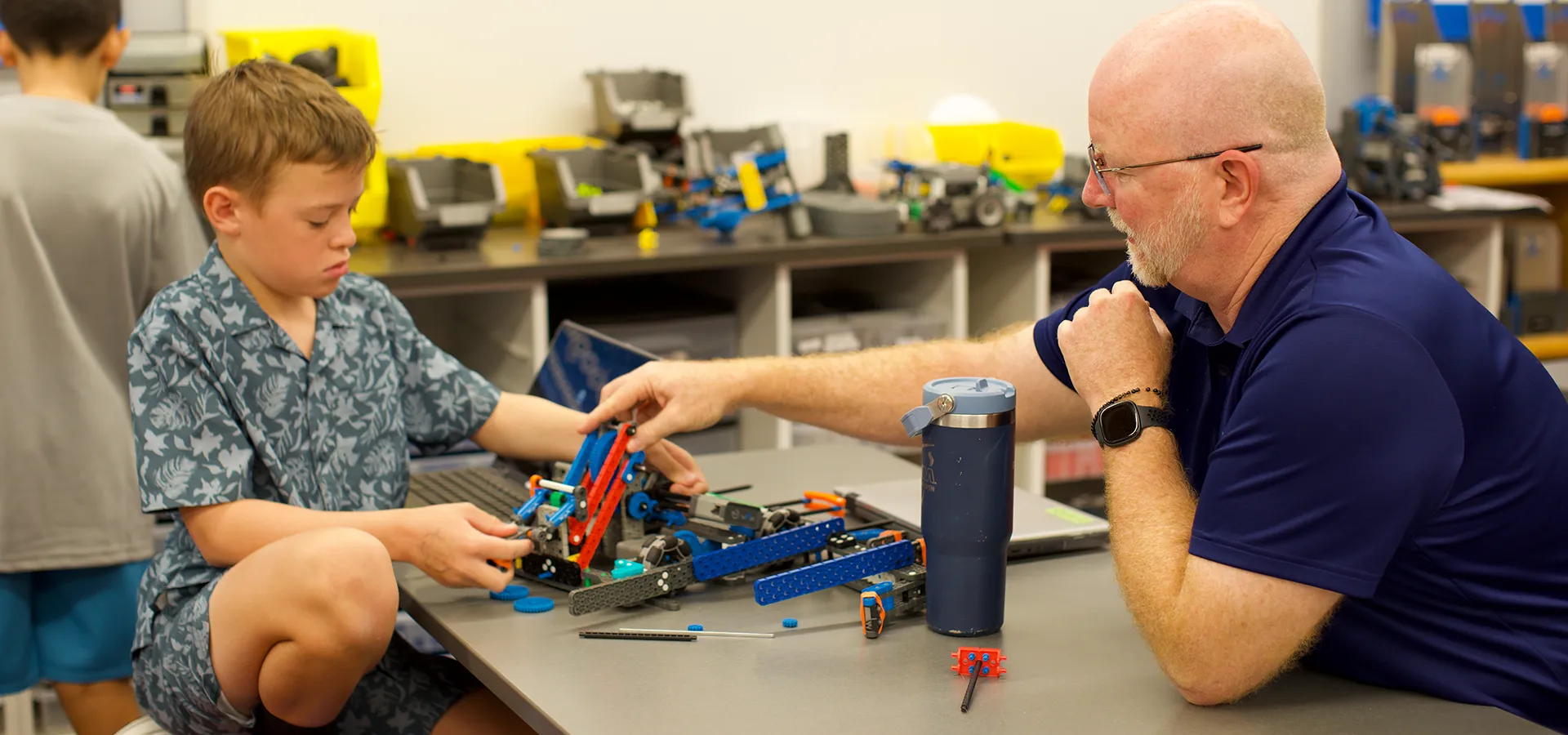
A place for every interested student.
Big opportunities. Small school.
At Summit, students don’t have to be experienced programmers or engineers to discover a passion for robotics. Cybercat Robotics creates opportunities for interested students to participate, collaborate, and grow in a supportive environment where learning matters as much as competition. With guidance from teachers, parents, and volunteer mentors, students develop new skills, build friendships, and discover strengths they may not have known they had.
A place to belong
Small teams give students opportunities to collaborate, build friendships, and learn from one another.
The freedom to try
Students can explore competitive robotics without traditional team tryouts or cuts, making participation accessible to a wide range of interests and abilities.
Confidence through experience
From unexpected setbacks to competition-day challenges, students develop persistence, independence, and leadership.
Because discovering what you’re capable of starts with having the opportunity to try.
Beyond the classroom.
Seeing robotics in the real world.
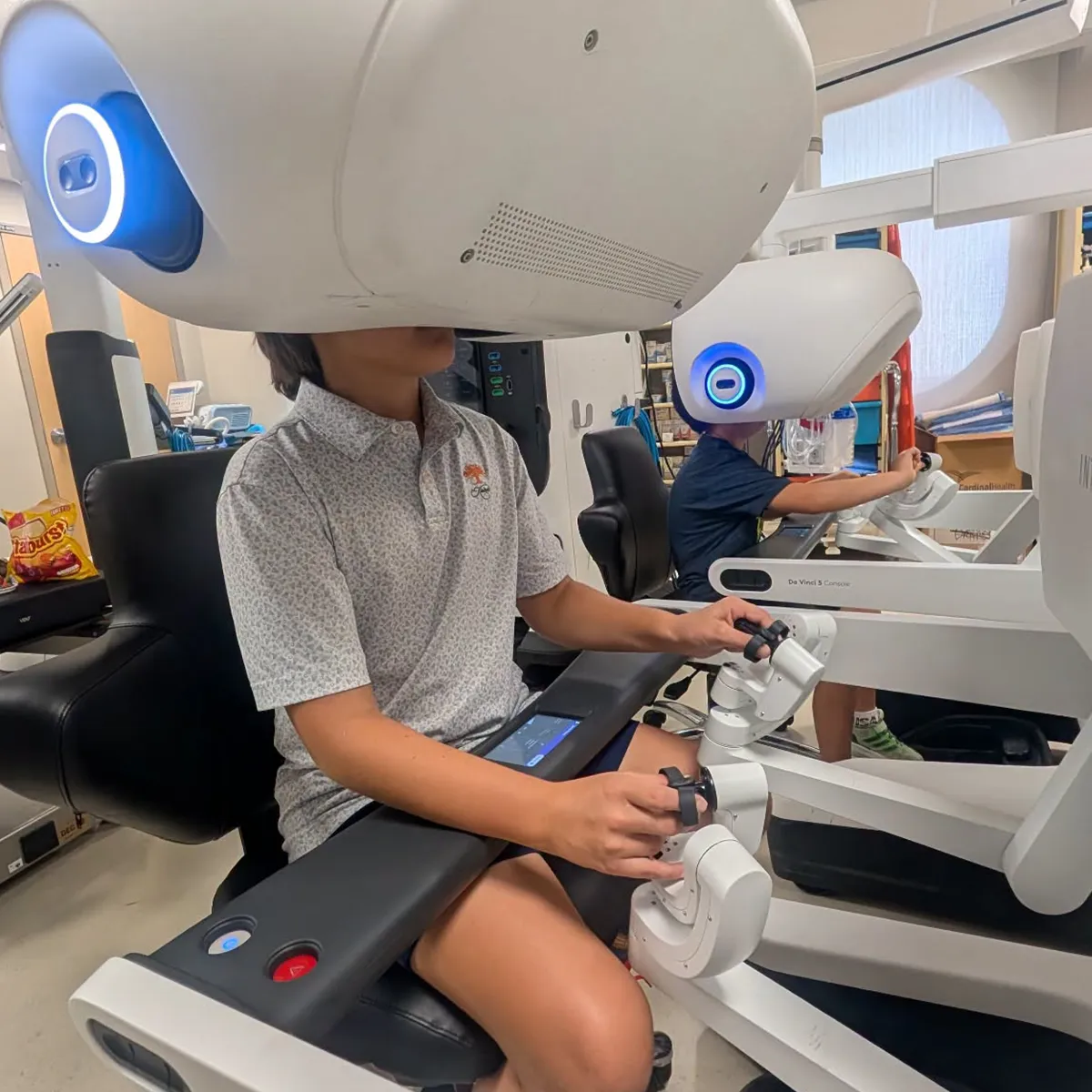
Robotics at Summit goes beyond building and programming robots. Experiences like a Cybercat Robotics field trip to explore surgical robotics give students a firsthand look at how engineering and technology are transforming the world around them.
By connecting classroom learning with real-world innovation, students begin to see how their interests and skills could lead to possibilities they haven’t yet imagined.
Award-winning mentorship.
Guided by experience. Driven by students.
Behind Summit’s robotics program is a community of educators and mentors who believe students learn best when they’re encouraged to think for themselves.
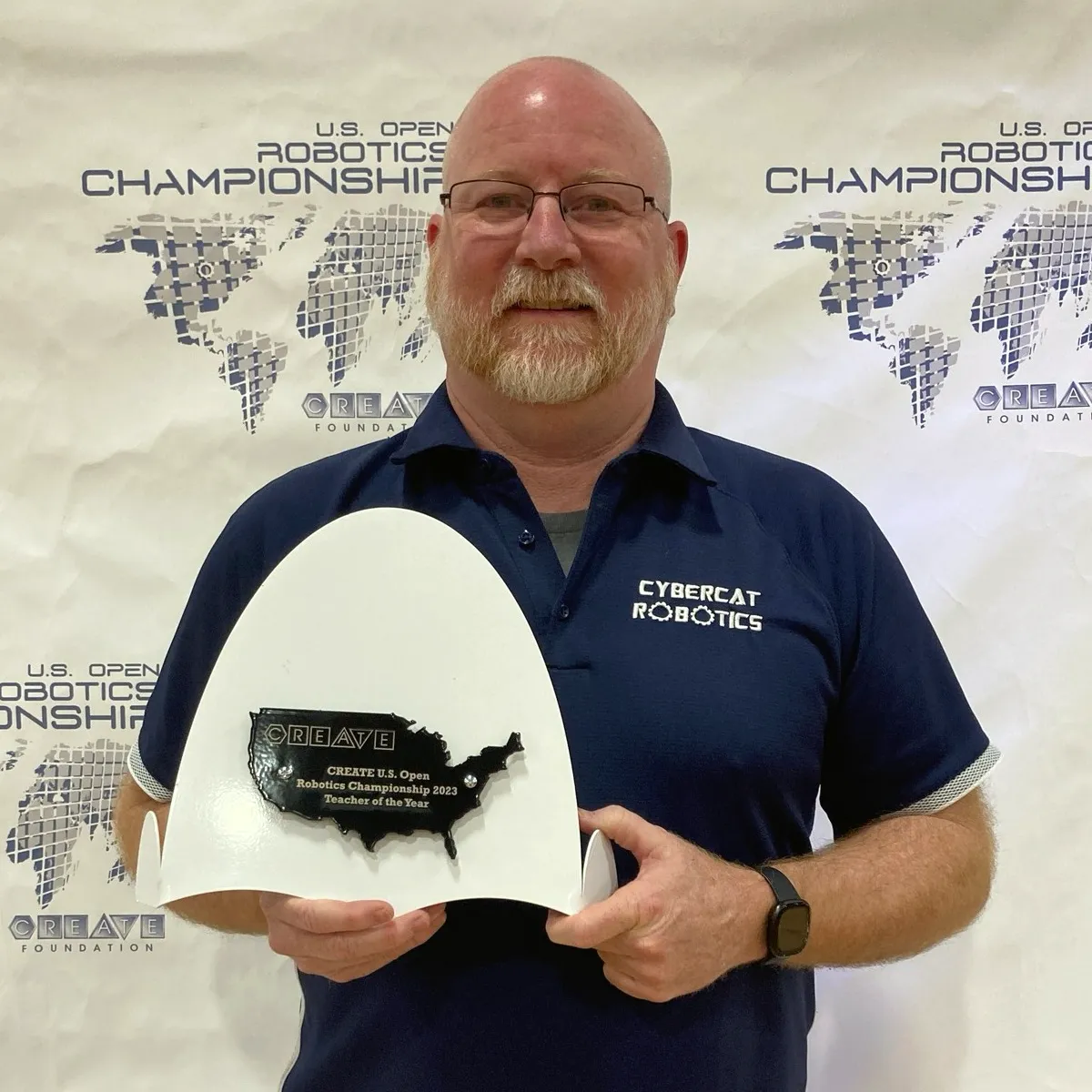
Led by Jeremy Douwstra, a recipient of the CREATE U.S. Open Robotics Championship Teacher of the Year award, the program combines experienced instruction with a strong commitment to student-led learning.
With support from teachers, parents, and volunteer mentors, students are encouraged to take ownership of their projects, work through challenges, and develop confidence in their abilities.
The goal isn’t simply to build better robots. It’s to develop better thinkers, problem-solvers, and teammates.
Have questions?
Frequently asked questions
Does Summit School offer robotics during the school day?
Yes! Robotics is integrated into Summit’s elementary technology curriculum, rather than being offered exclusively as an extracurricular activity. Students in kindergarten through fifth grade attend technology classes once every three school days. Beginning in second grade, robotics becomes a regular part of those lessons.
What grades participate in robotics at Summit?
Students begin developing foundational technology skills in kindergarten and first grade. Grades 2–3 explore VEX GO robotics, while grades 4–5 advance to VEX IQ. Middle school students can continue exploring robotics, coding, and engineering through technology electives. Competitive robotics opportunities begin in fourth grade.
Does my child need robotics or coding experience to participate?
No prior experience is necessary. Summit introduces technology and robotics skills progressively, allowing students to build confidence through hands-on exploration. Students learn to design, build, program, and solve problems as their skills develop.
What is Cybercat Robotics?
Cybercat Robotics is Summit School’s competitive robotics program for students beginning in fourth grade. Working in small teams, students design, build, program, and test robots for VEX Robotics competitions. Each year’s competition introduces new engineering challenges that encourage creativity, teamwork, and strategic thinking.
Can any student join Summit’s competitive robotics team?
Summit’s Cybercat Robotics program is designed to welcome interested students in grades 4–8 without traditional team tryouts or cuts. Students participate in small teams and receive guidance from teachers, coaches, and volunteer mentors while taking responsibility for their own engineering projects.
What skills do students develop through robotics and technology?
Beyond coding and engineering, students develop critical thinking, creativity, communication, collaboration, and perseverance. Robotics encourages students to experiment, learn from mistakes, approach challenges from different perspectives, and develop confidence in solving unfamiliar problems.
Discover the Summit difference.
Robotics is just one of the ways Summit encourages students to explore their interests, embrace challenges, and discover what they’re capable of achieving.
Through hands-on learning and meaningful opportunities to grow, students develop the confidence, creativity, and critical thinking skills to take on whatever comes next.
Questions about tuition? Explore tuition & affordability.