
Grades 6–8
Private middle school in Ahwatukee
Middle school designed for what comes next.
Summit School’s private middle school in Ahwatukee gives students in grades 6–8 the academic challenge, meaningful choices, strong relationships, and growing independence they need for high school and beyond.
Extended learning blocks, individualized academic pathways, project-based learning, diverse electives, leadership, service, athletics, and real-world experiences give students room to discover their strengths while teachers continue to know and support them as individuals.
Cognia Accredited
~16
Average Class Size
~9:1
Student-Faculty
Ratio
Preschool-8th Grade Community
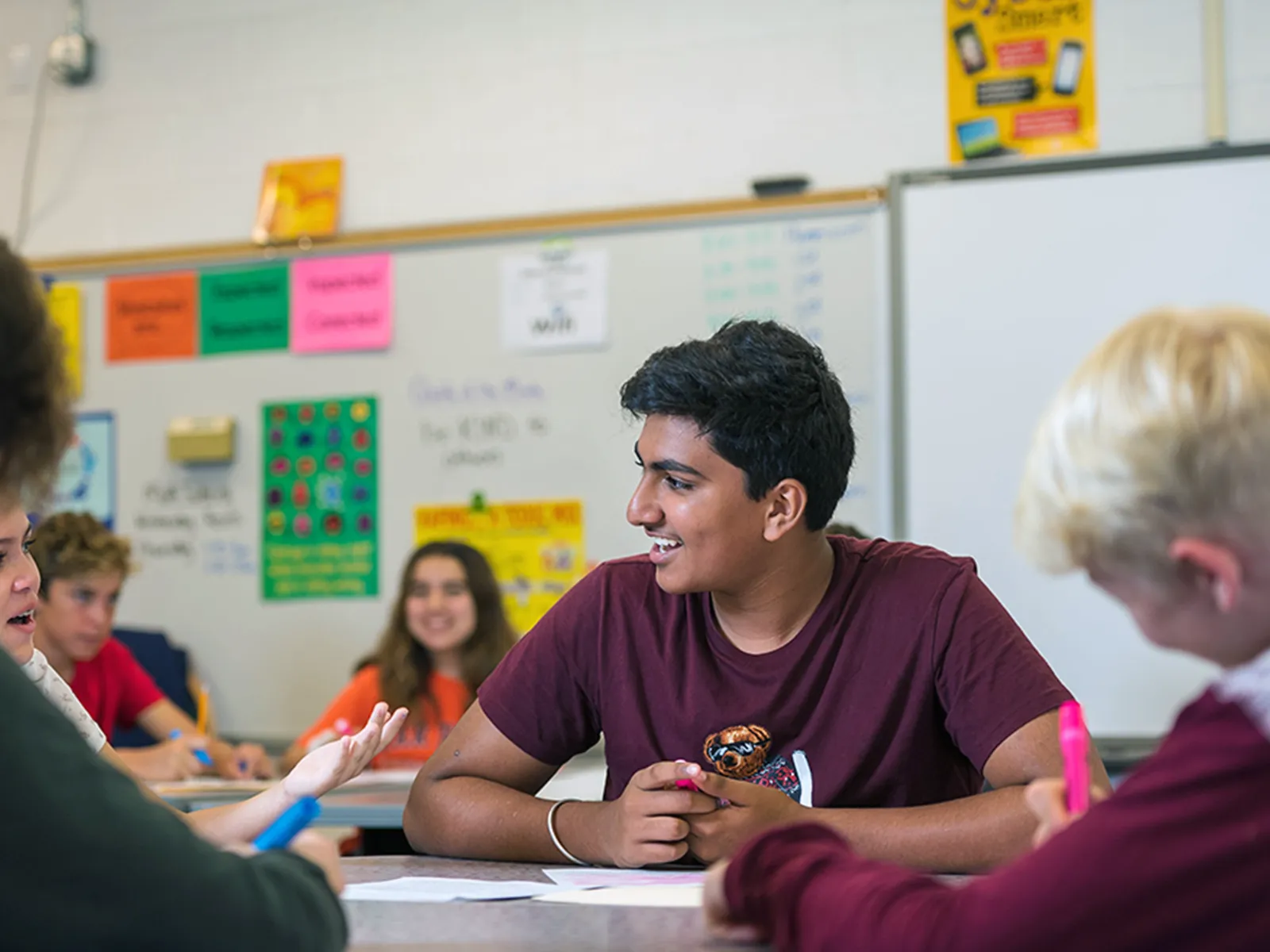
The Summit middle school experience.
More independence. More choice. Deeper learning.
What students need from school changes as they grow — the principles behind a Summit education don't.
Every student is known as an individual, challenged appropriately, and given real opportunities to question, create, collaborate, communicate, and apply what they learn.
Learning begins with play and exploration in the early years, grows into deeper inquiry and connection in elementary school, and builds toward greater independence and ownership in middle school.
The experience evolves with each student. The relationships, expectations, and sense of belonging never do.
Depth
Extended learning blocks create time to investigate, discuss, create, revise, and master.
Choice
A broad range of enrichment courses allows students to explore interests and discover new strengths.
Challenge
Differentiated academics and individualized pathways provide an appropriate level of rigor.
Independence
Students strengthen organization, responsibility, communication, and ownership of their learning.
Experience
Projects, leadership, service, athletics, mentorship, and ROPES connect learning to life beyond the classroom.
The Summit block schedule.
Less rushing. More learning.
Traditional middle school schedules often divide the day into a series of shorter class periods. At Summit, core academic subjects are taught in extended 80-minute blocks, giving students and teachers more time to go deeper.
A longer block allows a lesson to move from instruction into discussion, experimentation, collaboration, guided practice, problem-solving, or project work within the same class period. Students spend less time transitioning between classes and more time actively engaged in learning.
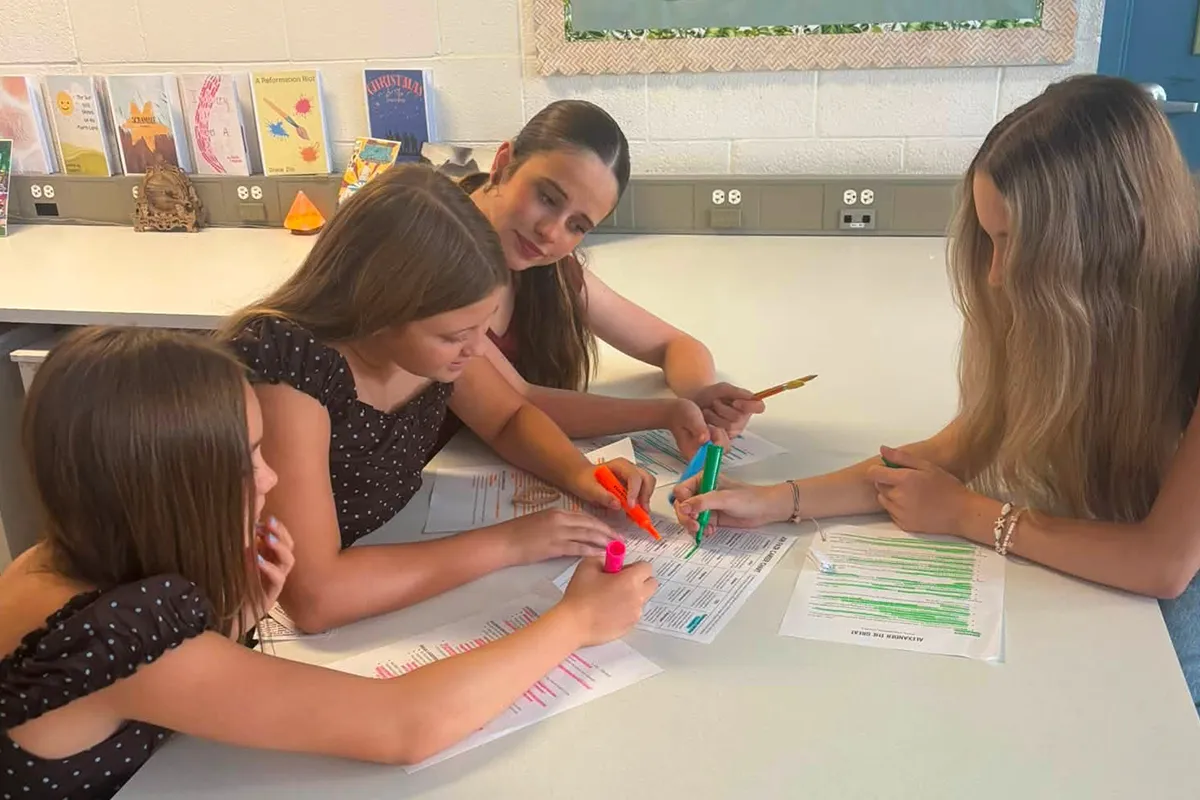
Explore deeply
Students have time to investigate complex ideas, make connections, and ask meaningful questions.
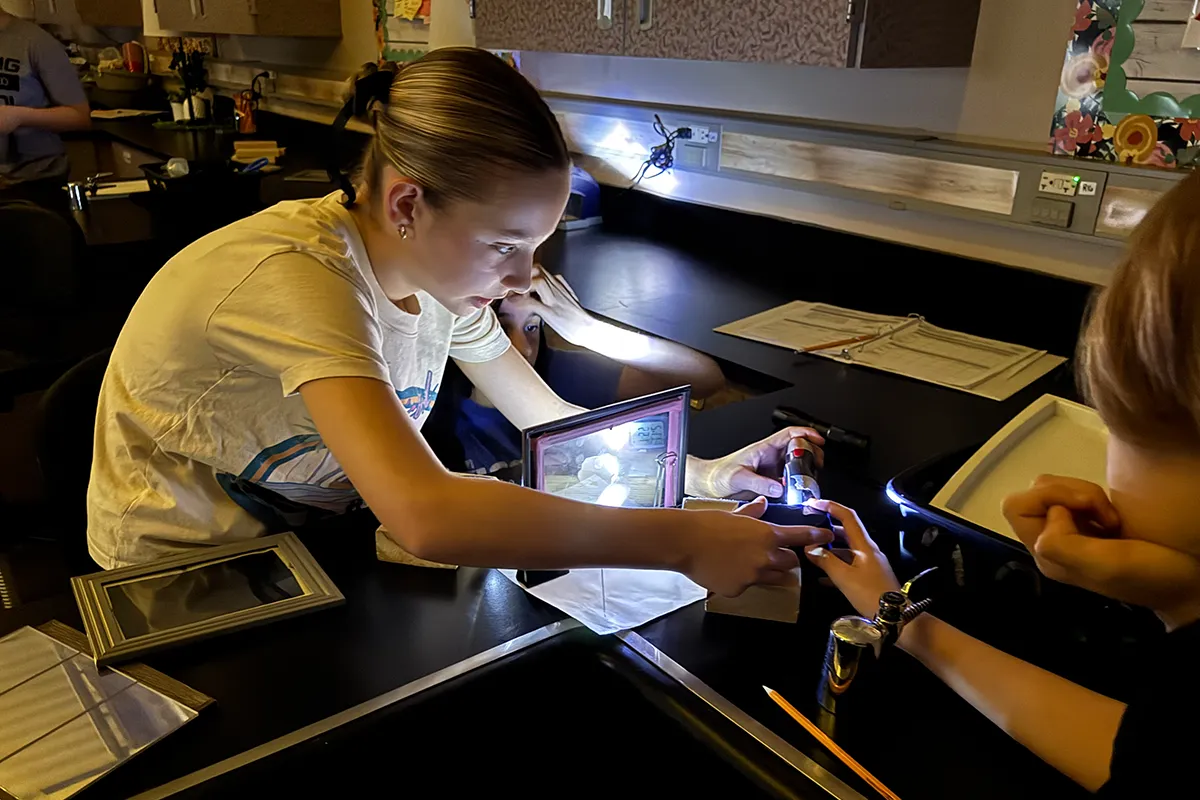
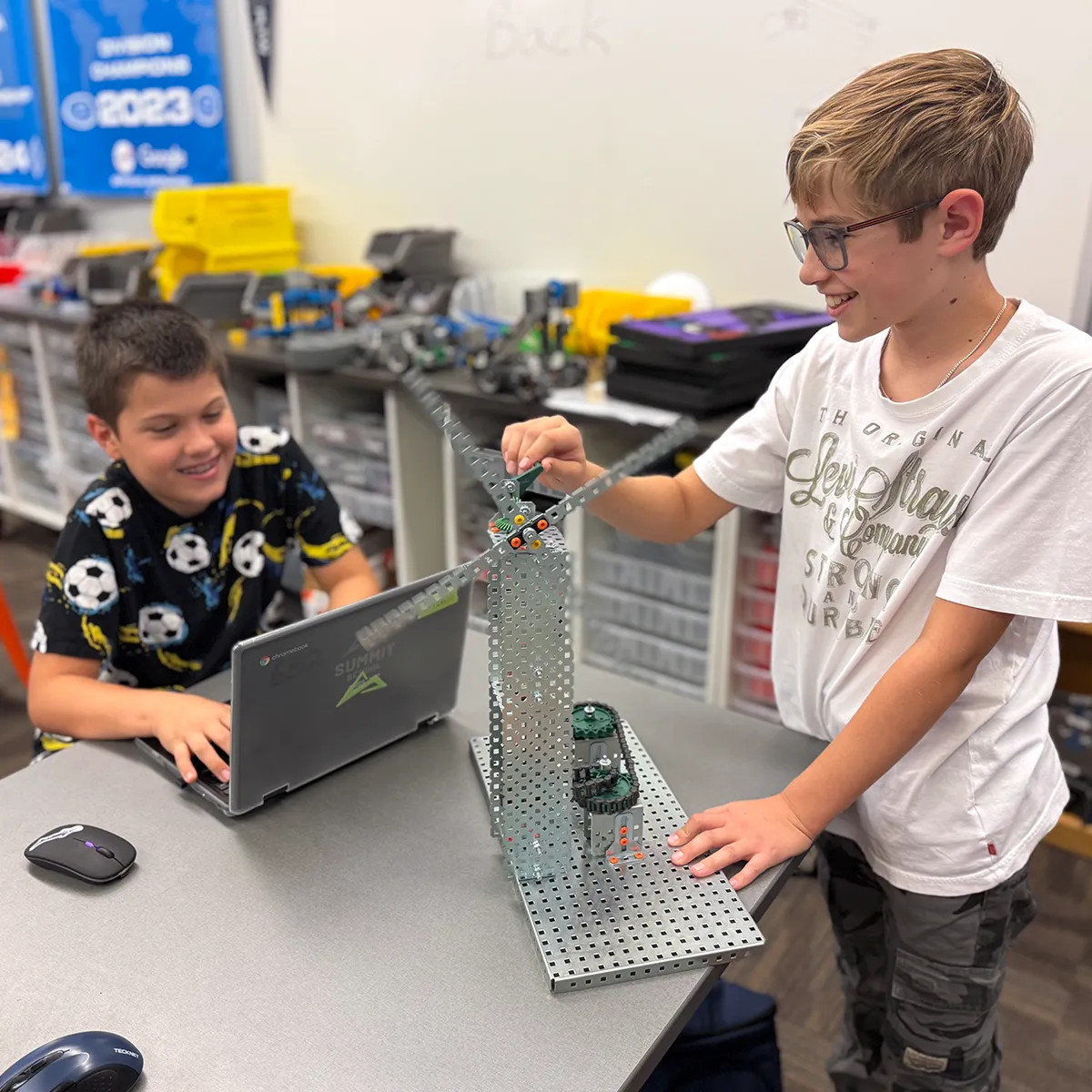
Learn by doing
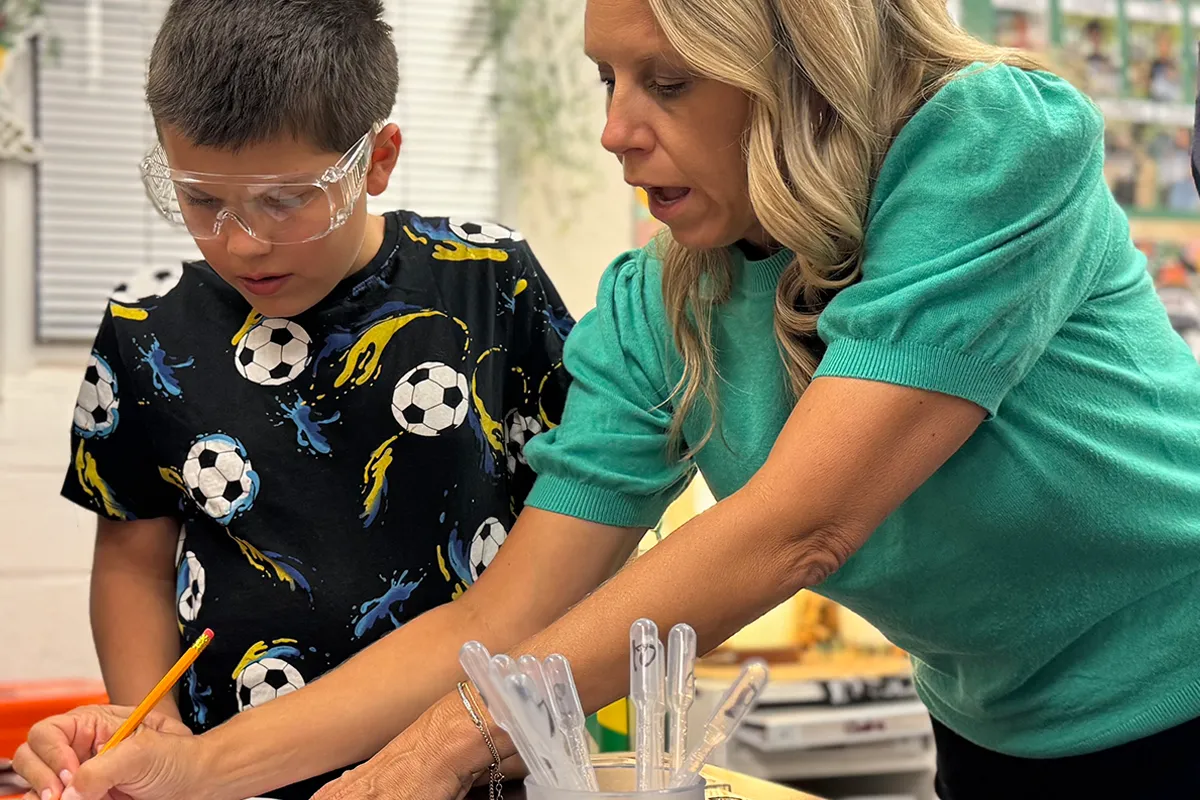
Science labs, projects, inquiry, collaboration, and problem-solving fit naturally within the class period.
Meet individual needs
Teachers have time for small groups, targeted support, guided practice, and additional challenge.
Reflect and revise
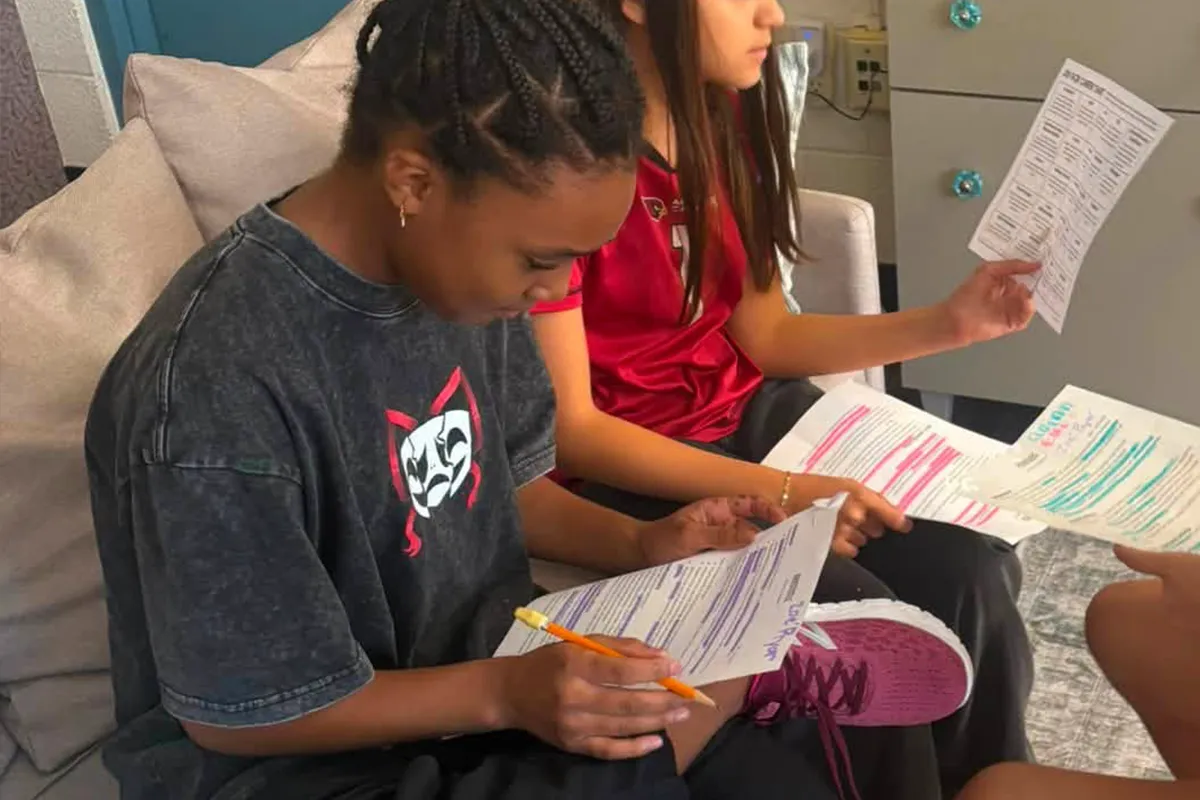
Students can ask questions, reconsider their thinking, improve their work, and develop deeper understanding.
More time in class doesn’t mean more lecture.
It means more time to do something meaningful with what students are learning.
Rigorous and engaging.
Building knowledge. Strengthening how students think.
Summit Middle School provides a strong academic foundation while developing the skills students will increasingly rely on in high school: critical thinking, research, analytical writing, problem-solving, communication, collaboration, and independence.
English language arts
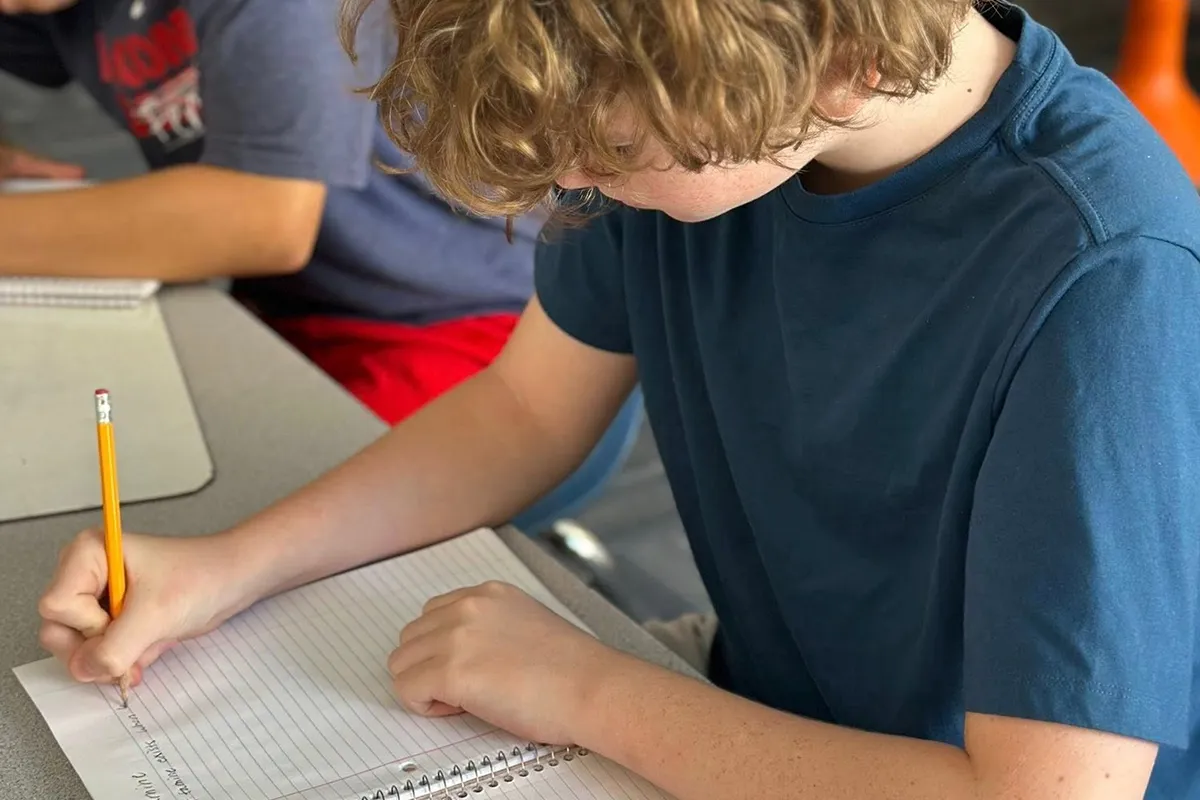
Students strengthen reading comprehension, analytical thinking, vocabulary, research, discussion, and written communication while learning to develop ideas and support them with evidence.
Mathematics
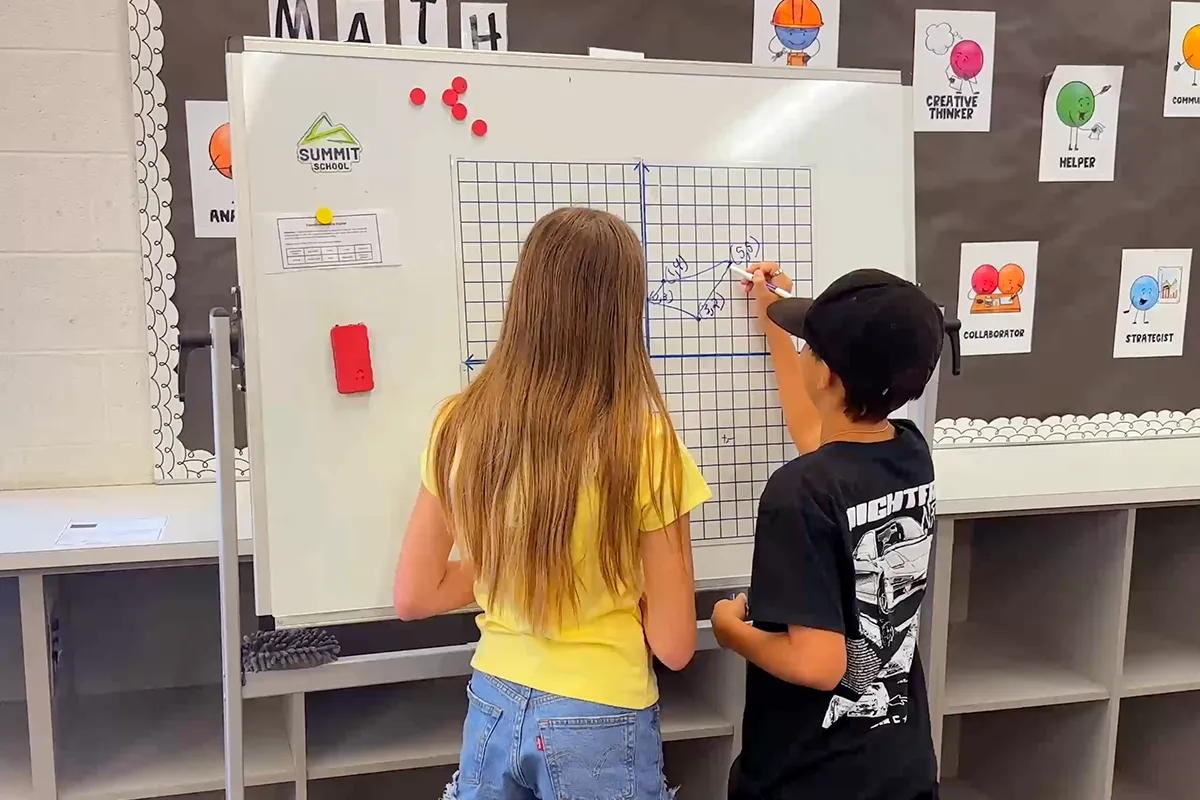
Students build conceptual understanding and procedural fluency while learning to reason mathematically, solve problems, explain their thinking, and apply concepts in new situations.
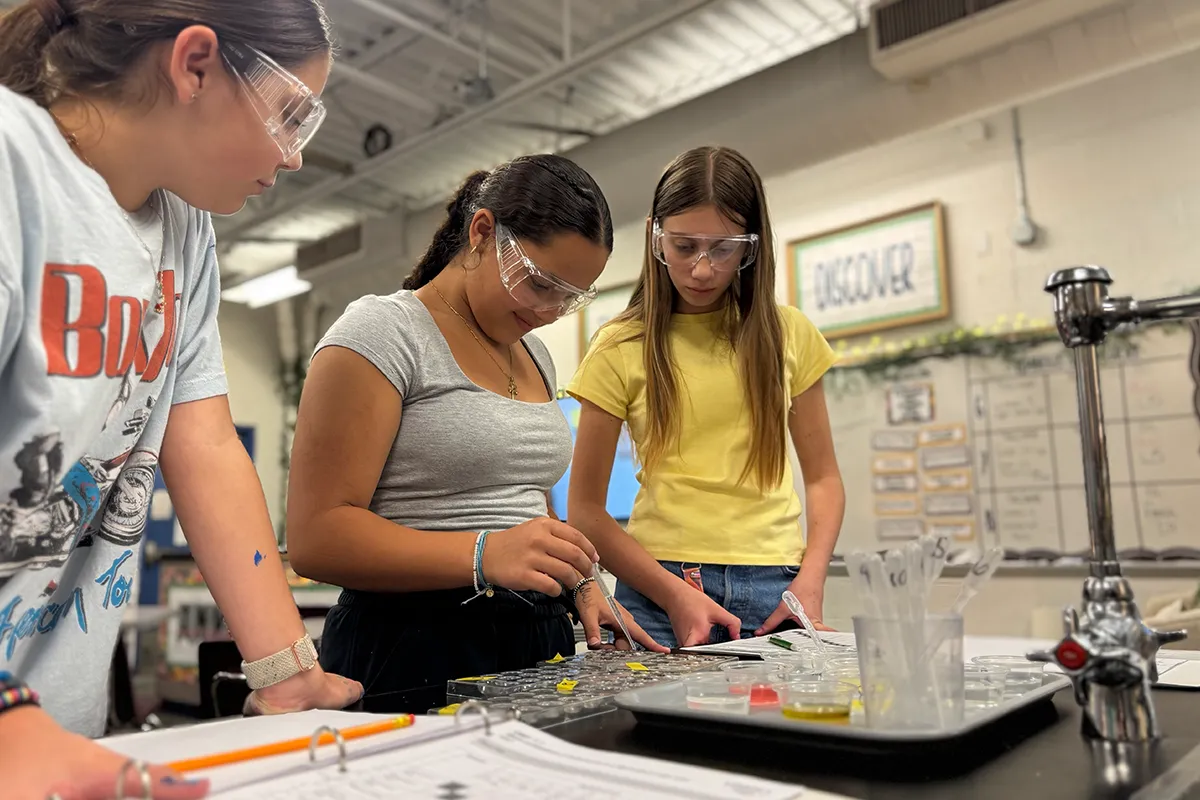
Science
Inquiry-based science brings concepts to life through experimentation, investigation, laboratory work, observation, analysis, and project-based learning.
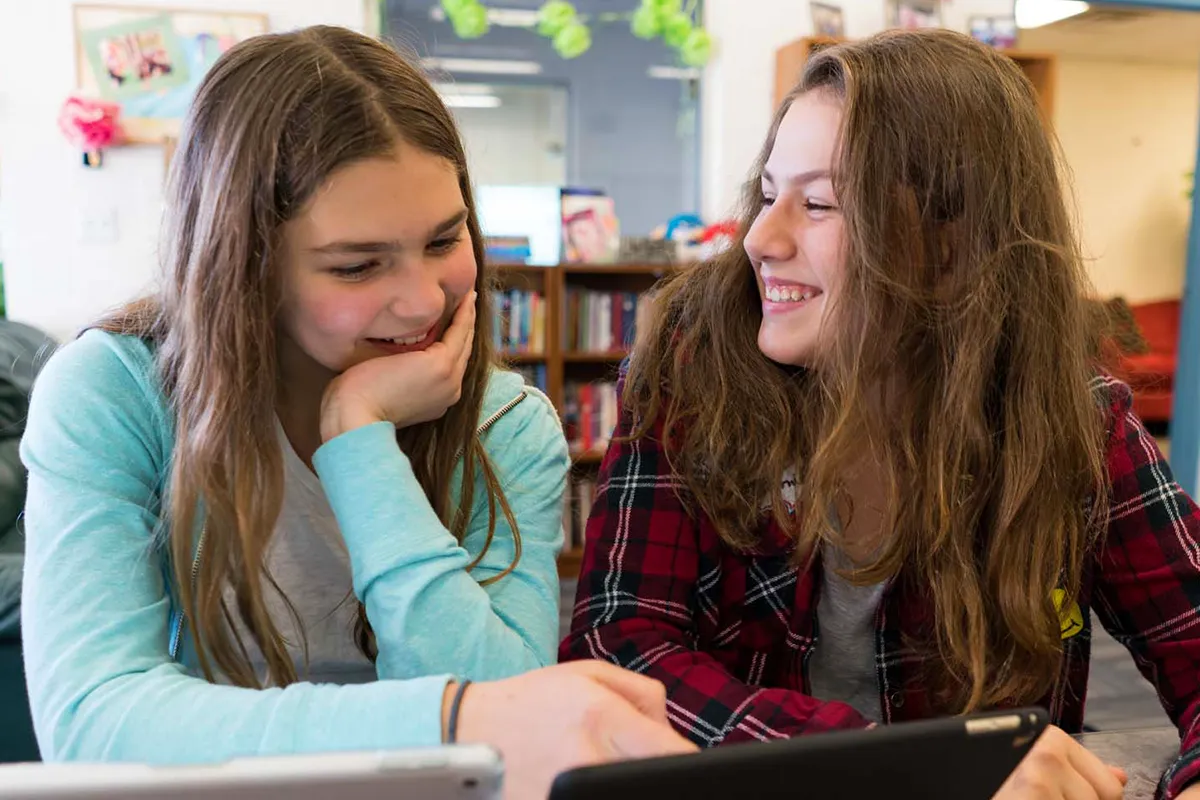
Social studies
Students develop historical understanding, global awareness, research and document-analysis skills, and the ability to examine ideas and events from multiple perspectives.
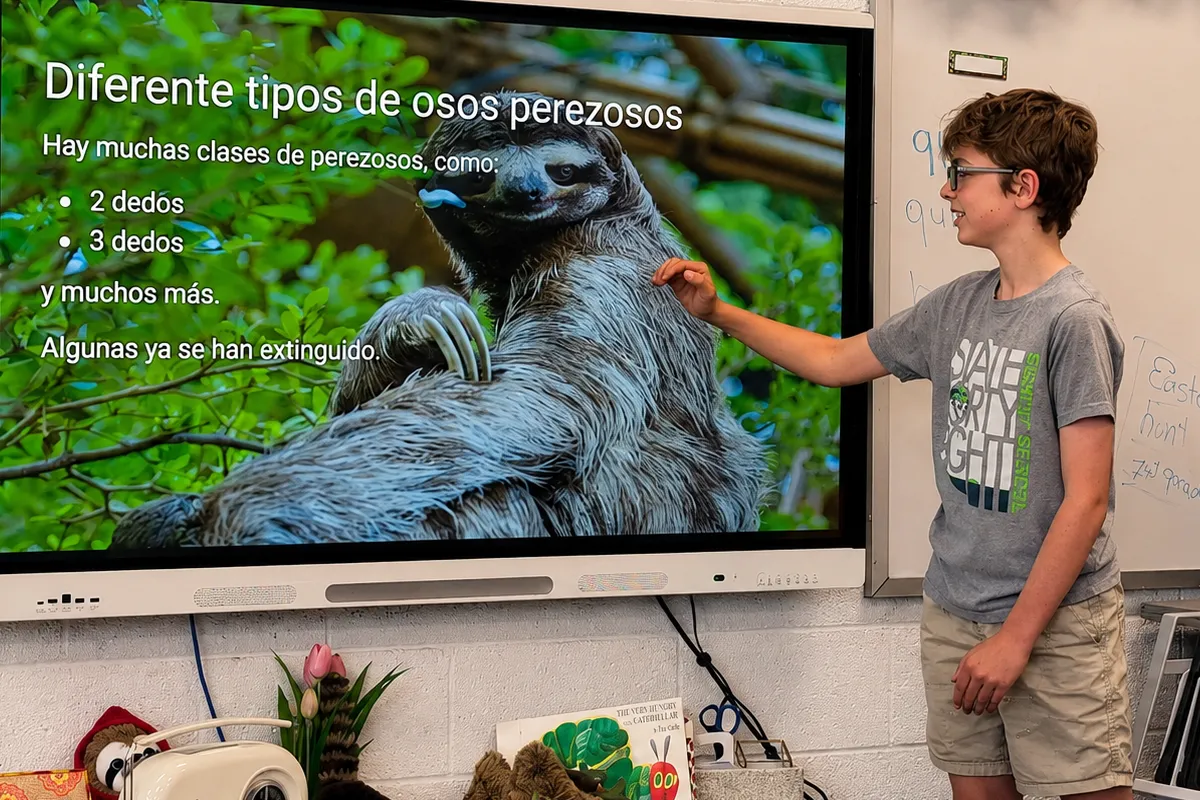
Spanish
Spanish instruction develops language acquisition, vocabulary, communication, speaking confidence, grammar awareness, and cultural understanding.
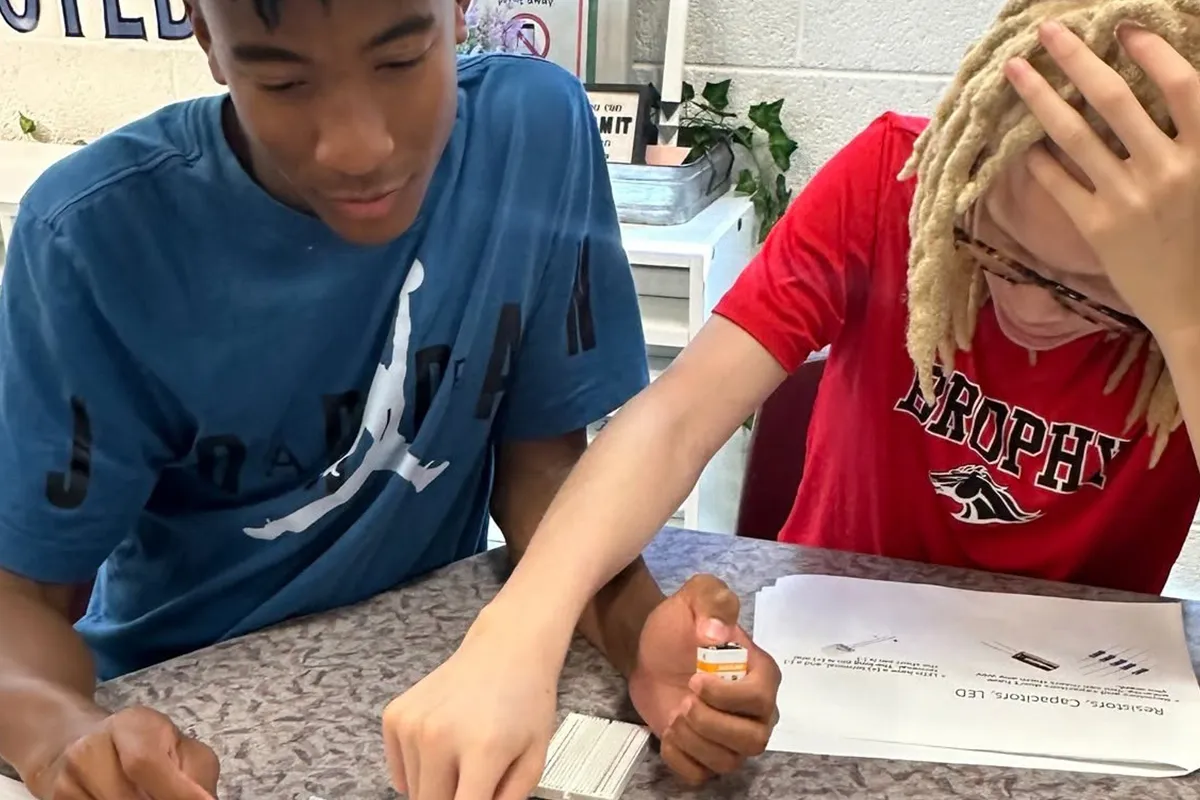
Learning across disciplines
Research, academic vocabulary, written evidence, discussion, reasoning, and presentation do not stop when one class ends. These skills are intentionally reinforced across the middle school experience.
Math pathways.
The right level of challenge.
A pathway for continued growth.
Students do not all develop mathematically at the same pace.
Summit uses multiple measures of readiness to help determine the level of challenge that best supports each student. Placement considers assessment data, previous performance, classroom evidence, teacher insight, and demonstrated readiness.
Middle school pathways allow students to progress from grade-level mathematics through advanced coursework based on their individual preparation and progression.
6th Grade Math
Pre-Algebra
Algebra
Geometry
Algebra 2*
*Algebra 2 may be available for students demonstrating exceptional readiness and appropriate prerequisite mastery.
Students do not need to be in the same place simply because they are in the same grade. Sixth Grade Math provides the foundational starting point for middle school, while students who demonstrate readiness may begin with Pre-Algebra. As students progress, placement continues to reflect demonstrated mastery and preparation for the next level.
Specific course offerings and cohorts may vary based on the readiness and needs of students each year.
More time to think, practice, and go deeper.
Math is taught in an extended daily instructional block, giving students meaningful time for direct instruction, guided practice, problem-solving, support, and enrichment.
Courses are designed as full-year learning experiences, allowing students to develop both procedural fluency and deeper mathematical understanding rather than simply moving through content as quickly as possible.
The goal is not acceleration for its own sake. It is to ensure that each student is appropriately challenged, supported in building a strong mathematical foundation, and prepared to take the next step with confidence.
Explore what interests you.
Choice is part of the school day.
Middle school is an important time to discover interests, develop talents, and try something new. Summit integrates a broad range of enrichment opportunities into the school day, giving students meaningful choices and the chance to create, build, perform, design, compete, communicate, and explore.
Offerings evolve based on student interests, faculty expertise, technology, and new opportunities, keeping the program dynamic and relevant.
STEM & technology
Robotics • Coding • Game design • 3D modeling • Engineering + more
Visual & digital arts
Drawing • Painting • Ceramics • Photography • Graphic design • Digital arts + more
Music & performance
Theatre • Dance • Rock band • Songwriting • Music composition + more
Communication & language
Journalism • Creative writing • Video production • World languages • Battle of the Books + more
Wellness & athletics
Athletic development • Sports • Recreation • Life sports + more
Leadership & life skills
Culinary • Leadership • Teacher internship + more
As student interests and the world around them evolve, so do our electives.
What never changes is the opportunity to explore, discover, and try something new.
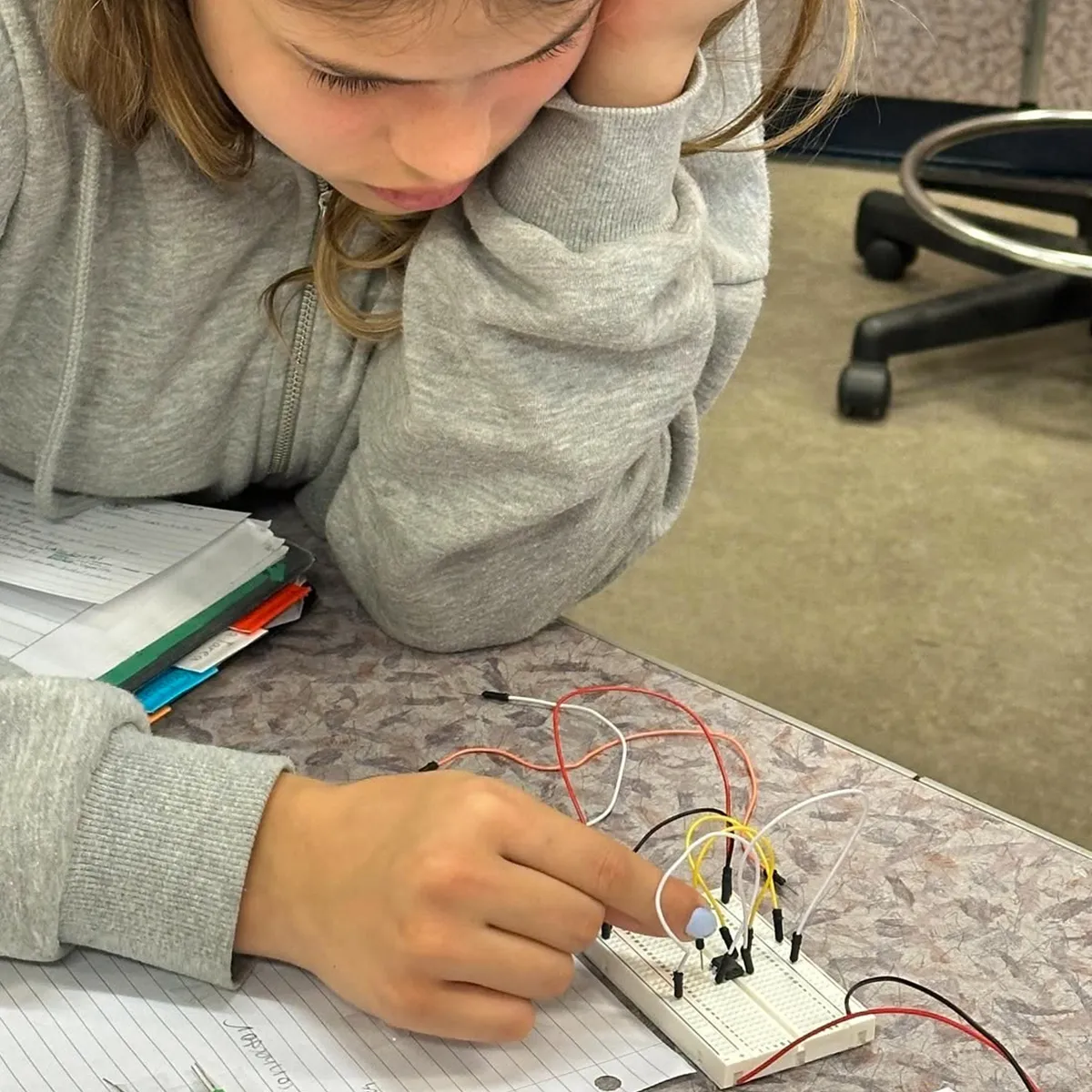
Project-based learning.
Where deeper thinking leads to meaningful work.
Project-based learning gives students opportunities to apply what they know, wrestle with complex questions, and see how ideas connect beyond a single lesson or subject.
Throughout middle school, students take an increasingly active role in the process. They ask deeper questions, investigate ideas and evidence, collaborate to solve problems, create purposeful work, and communicate what they have learned.
Ask
Investigate
Collaborate
Create
Present
Grade-level experiences give students opportunities to present their work, demonstrate what they have learned, and share their thinking with authentic audiences throughout the Summit community.
Learning becomes more than something completed for a grade. It becomes something students can explain, apply, and take pride in.
Known as an individual.
High expectations. Meaningful support.
Middle school brings greater independence and greater academic expectations, but students are not expected to navigate that transition alone.
Small classes and strong student-teacher relationships help teachers know students as individuals, understand their progress, and provide the right balance of support and challenge.
Assessment, classroom performance, teacher observation, and collaboration help educators identify what each student needs to keep moving forward.
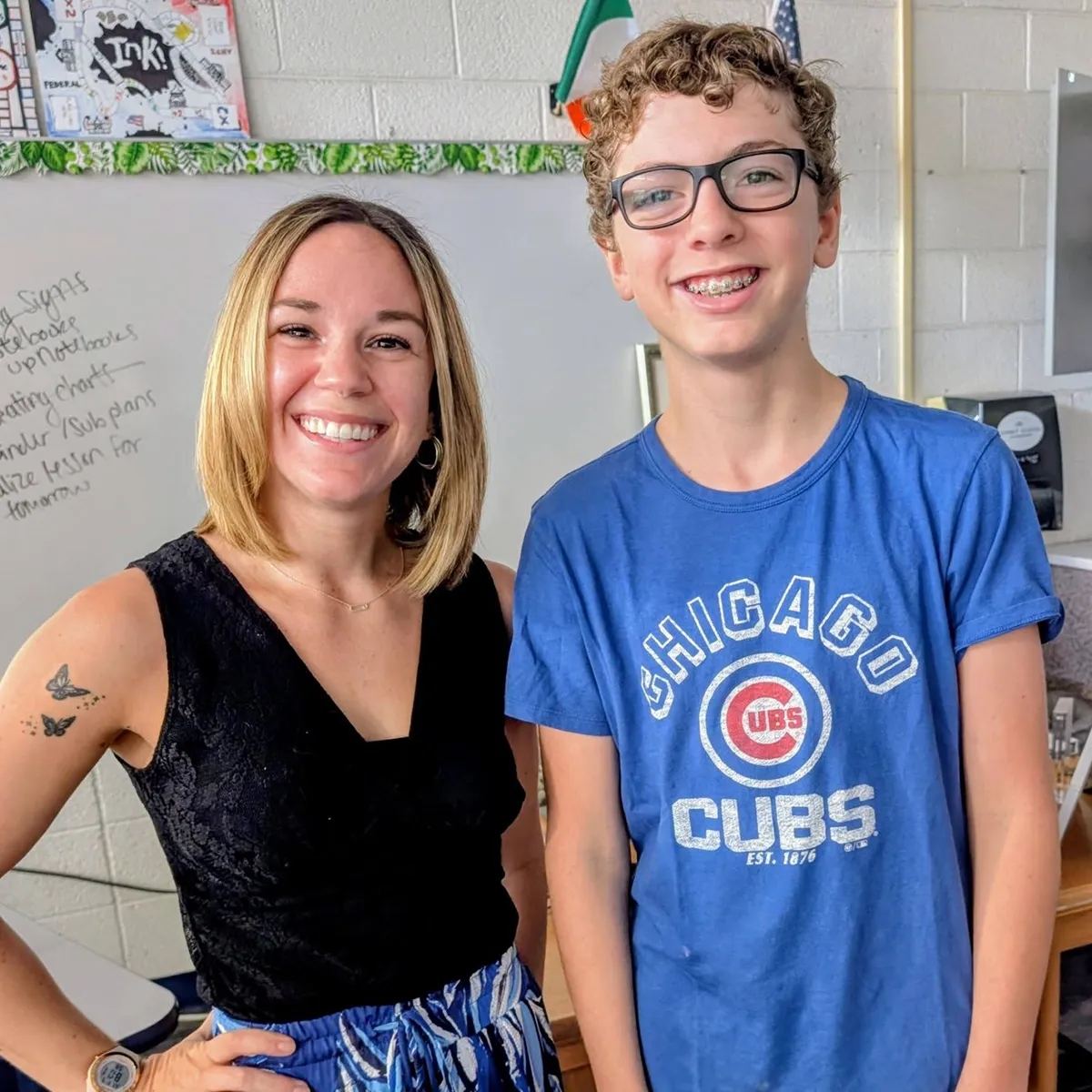
Support
Targeted instruction, small-group learning, feedback, and academic coaching help students strengthen skills and build confidence.
Challenge
Greater depth, complexity, enrichment, and advanced coursework provide appropriate challenge for students ready to move further.
Connection
Teachers work together around student progress, creating a connected experience across classes rather than isolated instruction.
Independence
Support gradually shifts as students grow, helping them strengthen organization, self-advocacy, responsibility, and ownership of their learning.
Known. Challenged. Supported. Ready to grow.
The eighth-grade capstone.
ROPES:
Putting it all together.
By eighth grade, Summit students are ready to take on something bigger.
ROPES, or Rite of Passage Experiences, is Summit’s culminating middle school capstone, bringing together the research, writing, critical thinking, organization, independence, mentorship, and communication skills students have developed throughout their Summit experience.
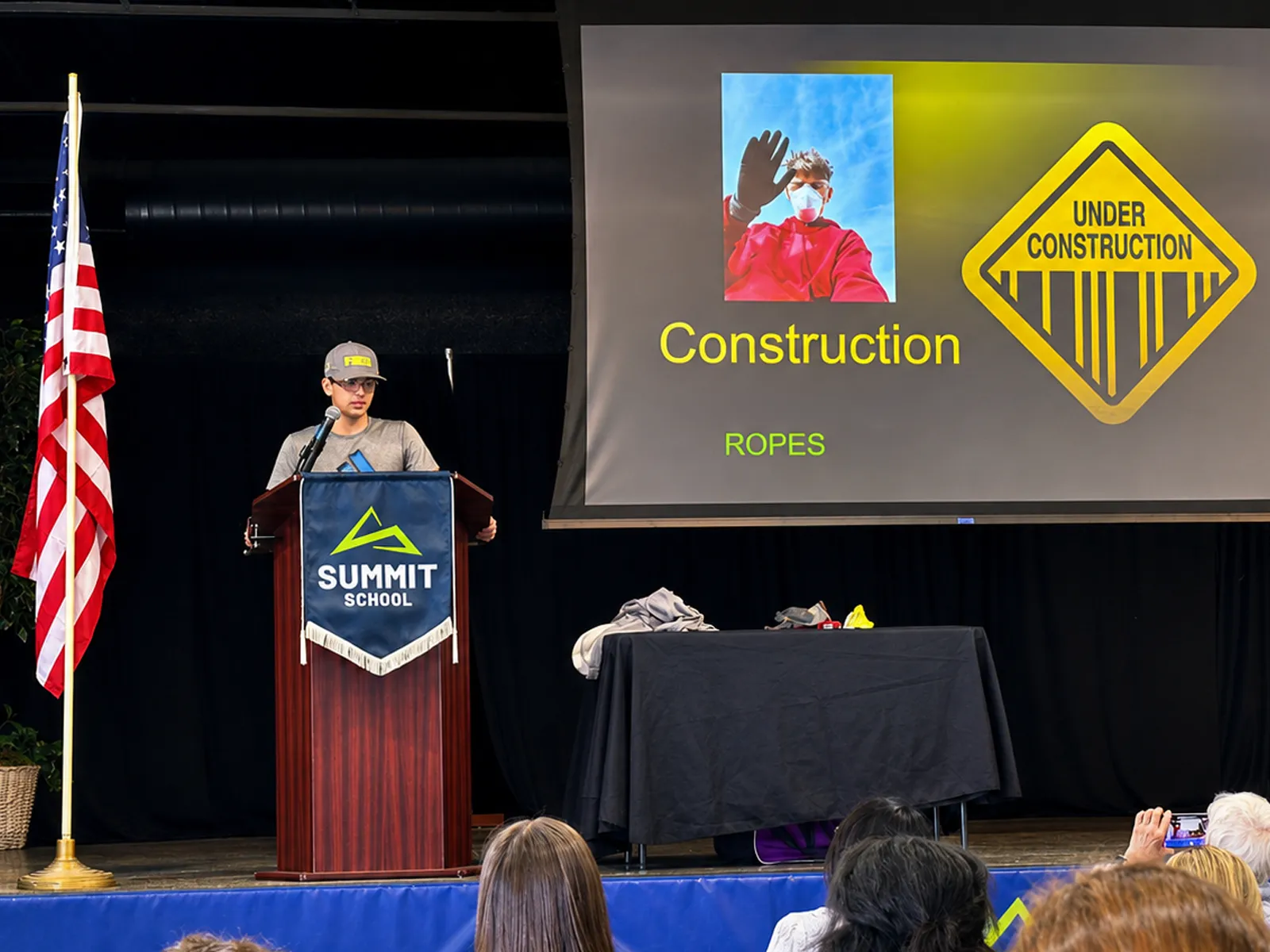
Students pursue an area of genuine interest and take increasing ownership of a long-term academic experience that extends from inquiry and research to mentorship and public presentation.
Student-selected inquiry
Students pursue an area of genuine interest and develop a focused research topic.
Academic research and writing
Students evaluate credible sources, analyze evidence, develop a thesis, and produce a formal research paper.
Faculty and community mentorship
Students work with both a Summit faculty mentor and an outside expert connected to their area of study.
Public presentation
Students demonstrate their expertise, present their work to an authentic audience, and respond to questions.
ROPES is more than an eighth-grade project. It is a culminating opportunity for students to demonstrate what they know, how they think, and how independently they can work.
Beyond the classroom.
Leadership is something students practice.
Leadership is not simply something Summit asks students to learn about. Middle school provides opportunities to practice it.
Students increasingly take responsibility, communicate with others, contribute to their school, serve their community, mentor, collaborate, and recognize that leadership includes responsibility beyond themselves.
s.E.R.V.E.
Summit Excellence Reflected In Volunteer Experience
Learning to make a difference.
Through SERVE, middle school students move beyond talking about community responsibility to participating in meaningful service experiences.
Service helps students develop empathy, recognize needs beyond themselves, contribute to their community, and understand that their actions can make an impact.
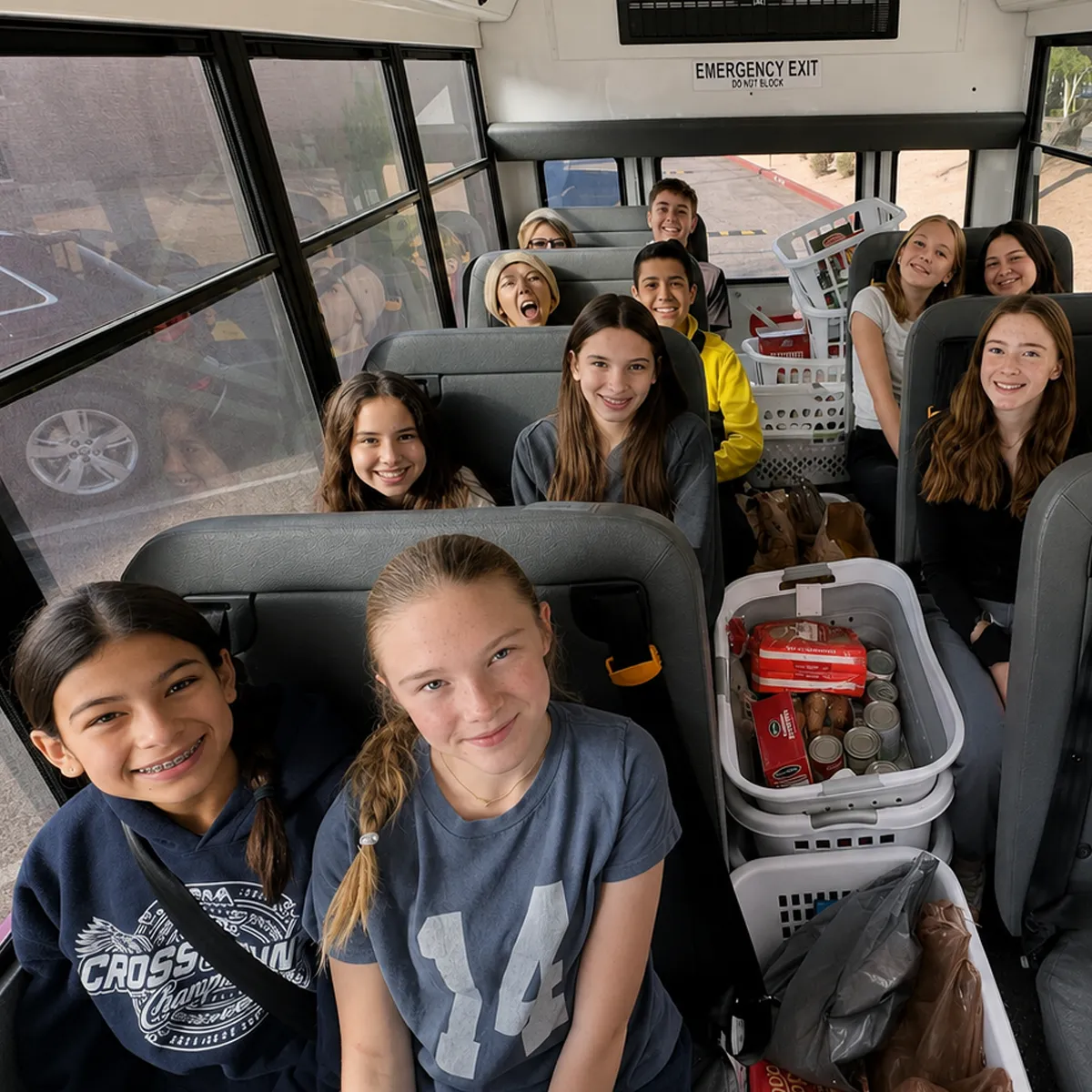
Student leadership.
Opportunities such as Student Council, National Junior Honor Society, leadership-focused electives, mentorship, service, presentations, and student-led projects give students authentic ways to contribute and lead.
Student voice.
Presentations, projects, and schoolwide gatherings give students recurring opportunities to share ideas, demonstrate learning, speak before authentic audiences, and develop confidence communicating with others.
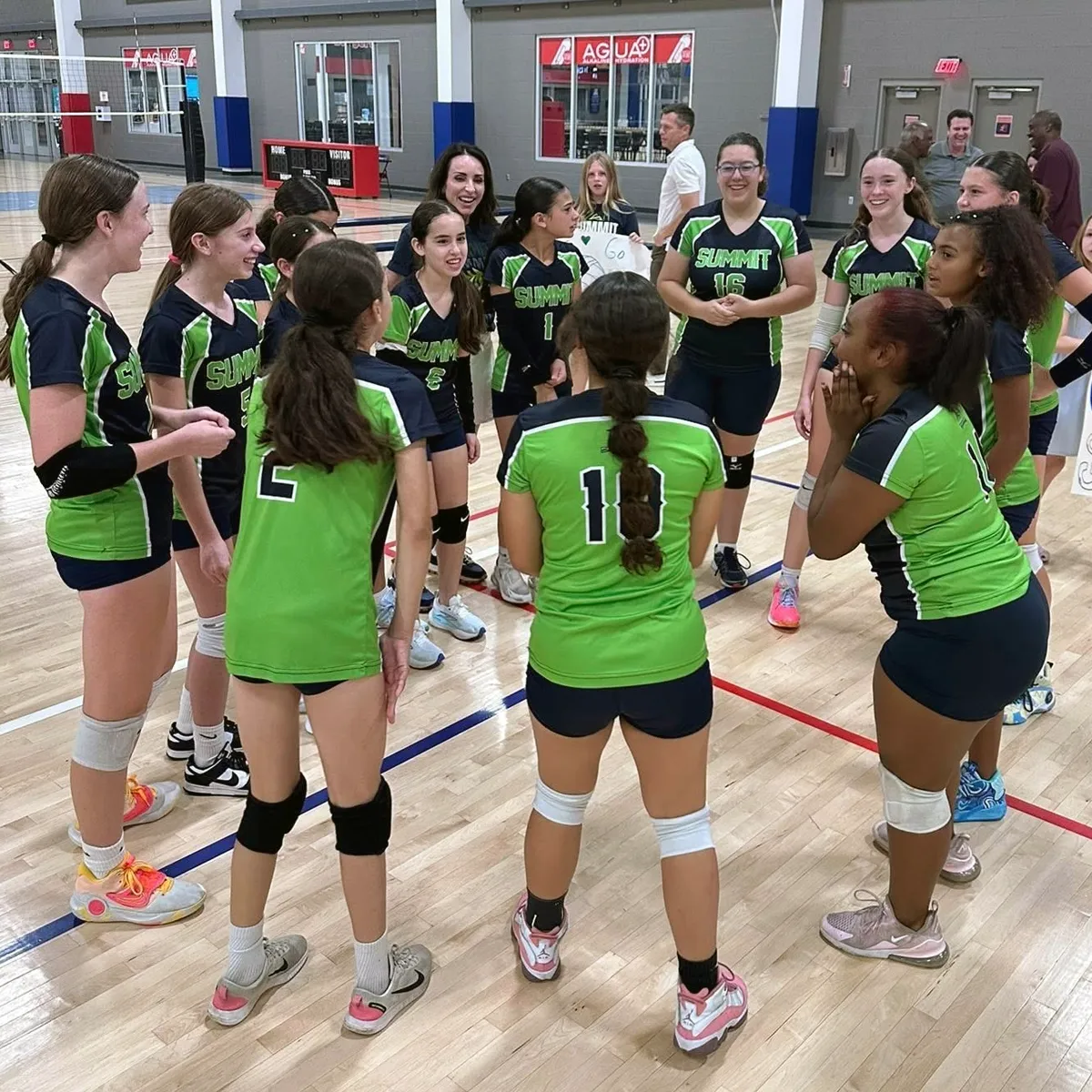
Summit athletics.
Compete. Grow. Be part of the team.
Athletics give middle school students another place to challenge themselves, build friendships, and feel connected to their school.
Summit’s competitive athletics program emphasizes skill development and competition while building teamwork, discipline, resilience, sportsmanship, confidence, and school pride.
Then I would use the large image area for an actual middle-school competition photo. Ideally something with motion and teammates, not a posed team photo.
Underneath, instead of the current generic athletics paragraph, I’d make the breadth visible.
Multiple ways to compete.
Students can participate in a variety of competitive sports throughout the school year. Offerings may include:
Volleyball • Cross country • Tennis • Basketball • Flag football • Cheer • Soccer • Golf
Athletic offerings may vary by season and year as Summit continues to develop opportunities for students.
Character and community.
Positive. Engaged. Accountable. Kind.
As students gain greater independence, they also assume greater responsibility for their choices, work, relationships, and community.
Summit’s PEAK framework provides consistent expectations across the school experience:
Positive
Recognize strengths, approach challenges constructively, and contribute to a supportive environment.
Engaged
Participate actively, ask questions, contribute ideas, and take ownership of learning.
Accountable
Take responsibility for choices, actions, commitments, and learning.
Kind
Practice empathy, respect, compassion, and care for others.
In middle school, accountability takes on new meaning as students increasingly manage assignments, communicate with teachers, organize their time, collaborate with peers, make decisions, and take ownership of increasingly independent work.
The goal extends beyond good behavior. It is to develop the judgment, empathy, responsibility, and self-awareness students will need beyond Summit.
Ready for what’s next.
Prepared for high school. Ready to own it.
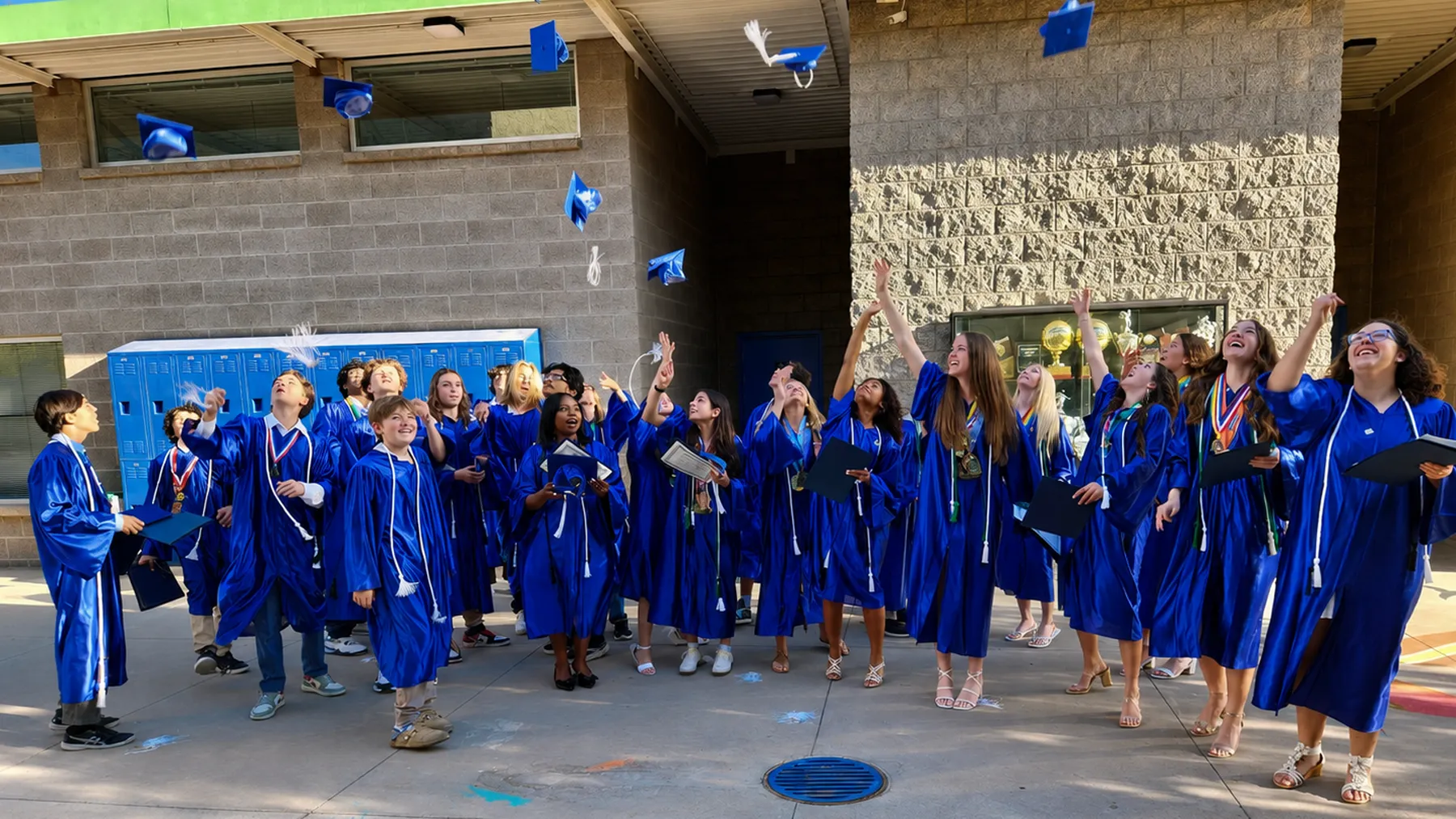
High school readiness is about more than completing academic standards. Throughout middle school, students develop the knowledge, habits, confidence, and independence they will need as expectations increase.
By the end of eighth grade, the goal is a student prepared to think independently, communicate effectively, manage greater responsibility, and contribute meaningfully to the communities they join.
Think independently
Research, analyze evidence, evaluate information, ask meaningful questions, and solve unfamiliar problems.
Communicate effectively
Write thoughtfully, explain ideas clearly, participate in discussion, and present with confidence.
Take ownership
Organize work, manage deadlines, advocate for themselves, persevere through challenges, and take increasing responsibility for their learning.
Contribute meaningfully
Collaborate, lead, demonstrate empathy, serve others, and understand their responsibility within a larger community.
Extended learning blocks, individualized academic pathways, project-based learning, electives, leadership, service, athletics, and ROPES all build toward the same goal:
Students ready to take ownership of what comes next.
Hear from Summit families.
Why families choose Summit.
Excellence built on high standards.
What Cognia accreditation means for Summit families.

Cognia accreditation provides independent validation that Summit meets rigorous, research-based standards for school quality and is committed to continuous improvement.
The accreditation process looks broadly at the educational experience, including a school’s culture of learning, leadership, student engagement, and student growth. For families, it provides an added measure of confidence that Summit’s Kindergarten–8th Grade program is evaluated against recognized standards for high-quality education.
Research-Based Standards
Independently evaluated
Continuous improvement
Middle school FAQ.
Questions about middle school at Summit.
What grades are included in Summit Middle School?
Summit Middle School serves students in grades 6–8.
How does Summit’s middle school schedule work?
Core academic subjects are taught in extended instructional blocks designed to provide time for deeper discussion, application, collaboration, projects, and individualized instruction. Enrichment opportunities are also integrated into the school day.
Why does Summit use 80-minute classes?
Extended classes give students and teachers time to move beyond brief instruction into discussion, experimentation, guided practice, collaboration, problem-solving, projects, reflection, and revision.
What core academic subjects do middle school students take?
Students study English Language Arts, Mathematics, Science, Social Studies, and Spanish, complemented by a broad range of enrichment opportunities.
How are students placed in math?
Placement considers multiple measures, including assessment data, previous coursework, classroom performance, teacher insight, and demonstrated readiness. The goal is to provide an appropriate level of challenge while maintaining strong mathematical foundations.
Can students take advanced math?
Yes. Summit offers differentiated middle school math pathways, with pathways extending through Geometry for appropriately prepared eighth-grade students.
What kinds of electives are available?
Offerings span areas such as robotics, coding, engineering, visual and digital arts, music, theatre, communication, world languages, athletics, leadership, culinary experiences, and more. Courses can change and evolve based on student interests, faculty expertise, technology, and new opportunities.
Does Summit offer robotics and coding?
Yes. Technology-focused enrichment opportunities can include robotics, coding, engineering, game design, 3D modeling, and related experiences. Specific offerings may vary.
Does Summit offer arts and music in middle school?
Yes. Middle school students can explore visual, digital, musical, and performing arts through enrichment offerings that may include drawing, painting, ceramics, photography, graphic design, theatre, dance, rock band, music composition, and more.
What is ROPES?
ROPES, or Rite of Passage Experiences, is Summit’s eighth-grade capstone. Students pursue an area of interest through academic research, writing, mentorship, and a formal public presentation.
What is SERVE?
SERVE is Summit’s middle school service and civic engagement program, providing opportunities for students to contribute to their community while developing empathy, leadership, and social responsibility.
How does Summit support students who need additional help?
Small classes, differentiated instruction, assessment data, teacher observation, targeted instruction, feedback, and collaboration among faculty help teachers understand and respond to individual student needs.
How are advanced students challenged?
Students ready for greater challenge can encounter additional depth, complexity, enrichment, and appropriately advanced coursework based on readiness. Individualized math pathways provide another opportunity for academic differentiation.
Does Summit offer competitive athletics?
Yes. Summit offers competitive athletic opportunities designed to develop teamwork, discipline, resilience, sportsmanship, confidence, and school pride. Specific sports may vary by season and year.
How does Summit prepare students for high school?
Preparation extends beyond academic content. Students practice research, analytical writing, public speaking, organization, time management, collaboration, self-advocacy, long-term project management, and increasing ownership of their learning.
Can students enter Summit in sixth, seventh, or eighth grade?
Students may apply to Summit Middle School based on space and availability. Families interested in joining Summit are encouraged to contact Admissions to discuss current openings and the application process.
See what middle school can be.
Choosing a middle school means finding the right combination of academic challenge, opportunity, support, independence, and belonging.
Come see Summit classrooms in action, meet our educators, and experience the community for yourself.
Questions about tuition? Explore tuition & affordability.